
What we do
Visibility is not the problem
AI reasons based on alignment and context, not keywords. Modulus studies AI models to investigate harmful AI answers, unsupported recommendations, and failures to include or properly rank your organization.
AI already knows your organization
When a customer asks AI about your organization, they are deciding whether to do business with you, and if the answer is wrong, you lose the customer. There is no way to know how often this happens.
Modulus provides a clear picture of how AI understands and represents your organization, along with the evidence, tools, and professional support to challenge unsupported recommendations and failures to include or properly rank you.
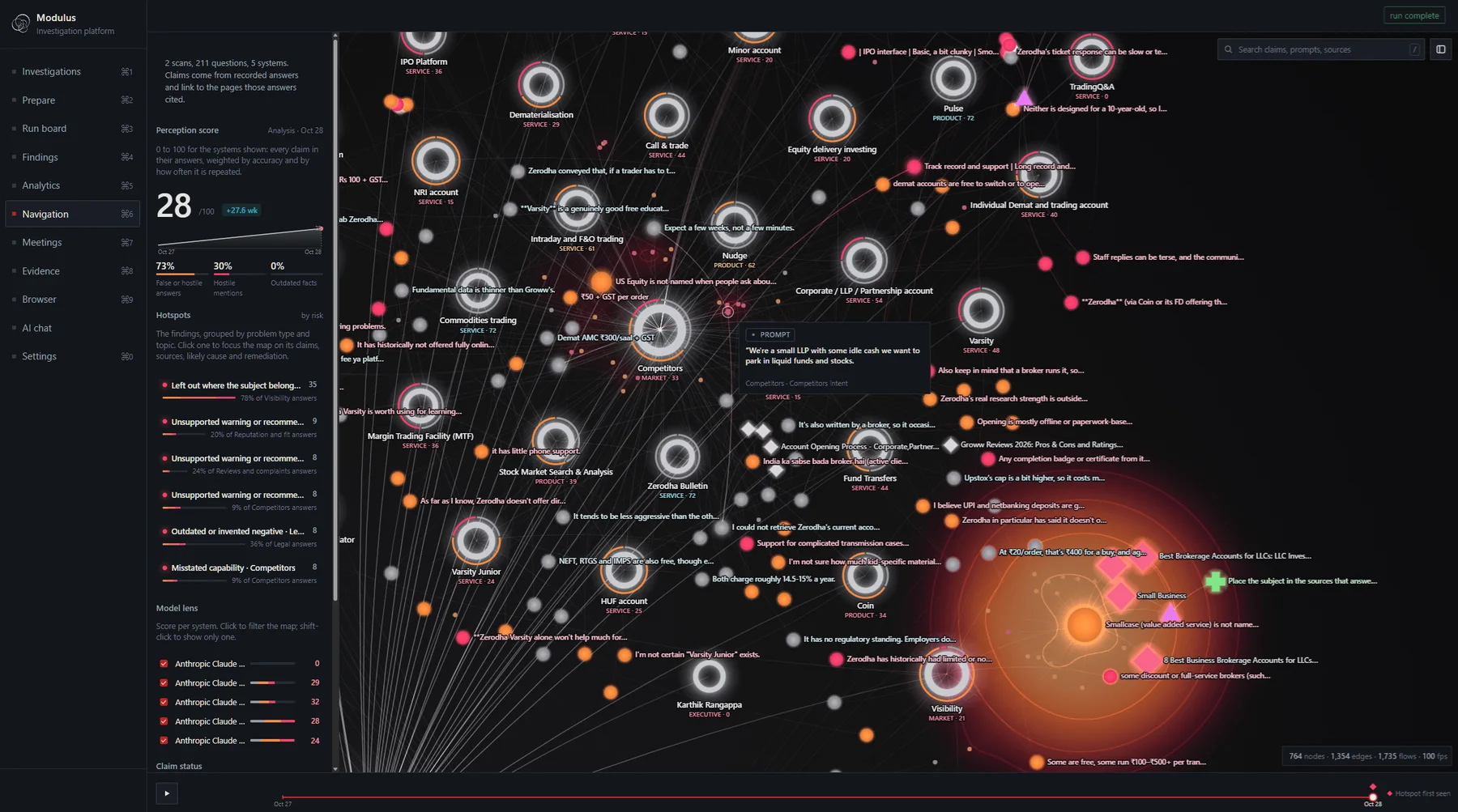
From a company, website, or product, we automatically build a profile you can refine, covering offerings, people and verified facts. Multiple AI models investigate competitors, ratings, reviews, news, lawsuits, regulatory actions, filings, product issues and executive backgrounds. Findings based on actual AI responses are linked to their sources and ranked by impact on your business.
Modulus tests thousands of real and statistically modeled questions, beyond the tens or hundreds of standard prompts used in SEO and AEO. Questions are reviewed in your market’s language, weighted toward the types of prompts your customers use to make decisions. Coverage spans dozens of providers, models and reasoning levels, with and without AI web search enabled.
A/B comparisons against verified facts identify factual errors, misstated capabilities, identity confusion, unsupported warnings, invented negatives, disparagement and omissions, each graded by severity. Conflicting answers are adjudicated to identify systems likely to be wrong. Research buyer questions across multiple AI configurations, identify errors, and monitor results.
Evidence you can act on
Each finding becomes an exhibit, including the timestamp, question and AI answer, issue and severity. Exhibits include timestamped full-page captures with cryptographic hashes. Evidence is searchable by claim, system, configuration and date, with PDF and manifest packages available in one click for notices, demand letters or litigation.
A clear path to improvement
Perception maps connect problem clusters to sources, likely causes, recommended fixes and projected effects. Sentiment graphs track you and your competitors across models and over time, while comparisons between runs reveal what changed. Our AI researchers provide evidence-based recommendations when you need help.
Oversight and reporting
Modulus consultants help you understand and correct AI output that can severely damage your reputation and cost you business. We explain the findings, guide the corrections and test whether the problems are corrected. Email digests track findings and progress, with direct access to our professional consultants when you need help.
The service
How Modulus works
Modulus runs thousands of questions through every relevant AI system, phrased the way your customers use AI. You can review the findings with the source URLs that correspond to each problem, your standing against competitors on the questions that decide deals, the changes we recommend, and projections of the effects. When a problem is found, our researchers help you understand and resolve it immediately.
When a correction request must be sent to a publisher or AI provider, we prepare the request and the evidence package for you. Facts are verified under our published standard, MOD 1401:2026, so AI systems can confirm a corrected record immediately. Access to our AI Management Console is available to all members of your team, and professional consultations via web meeting are available as needed.

Research
We study the models your customers use
- ChatGPT
- Claude
- Gemini
- Perplexity
- Duck.ai
- Meta AI
- Kimi
- Copilot
- Grok
- DeepSeek
- Qwen Chat
- Other platforms and open models
Modulus studies every model your customers use. ChatGPT, Gemini, Copilot, Perplexity, Claude, Grok, Meta AI and many other models, across versions, settings and difficulty levels.
Our AI researchers test and benchmark each new release the moment it ships to determine what changed and how it may affect your business. We present our findings immediately.
This level of professional service is one of the key differences between Modulus and self-service providers such as Scrunch, Profound, and Peec, which only report what AI says, without a scientific understanding of how AI forms an opinion of you.
Agentic AI
Zero Click Marketing
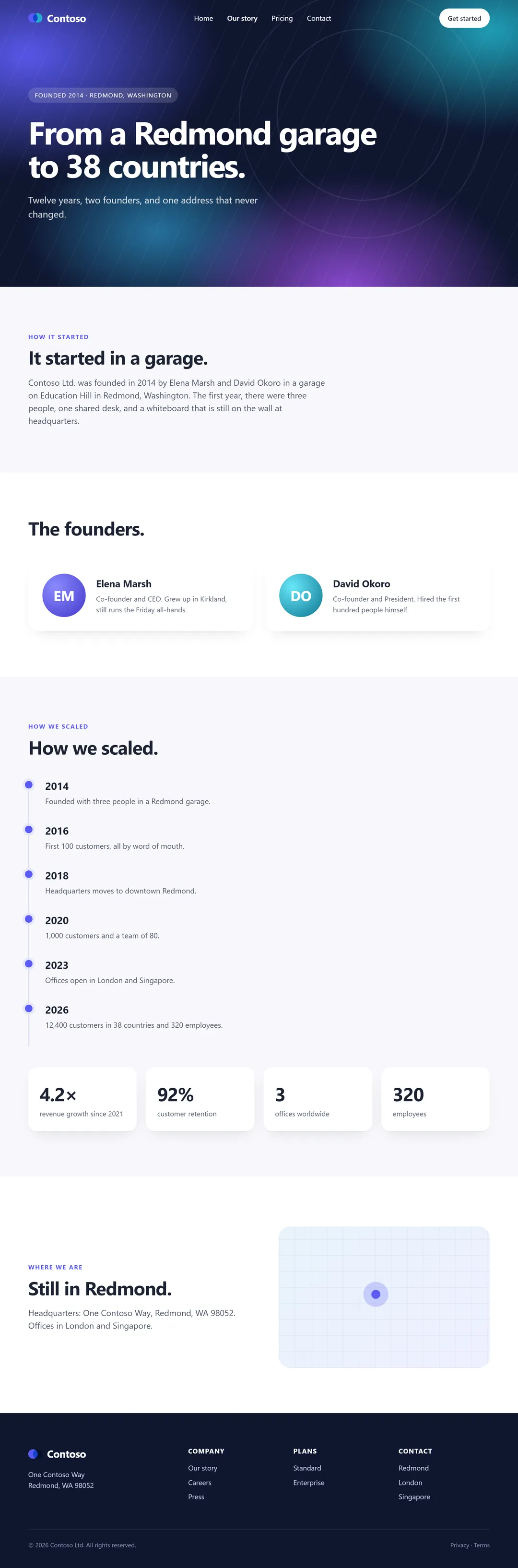
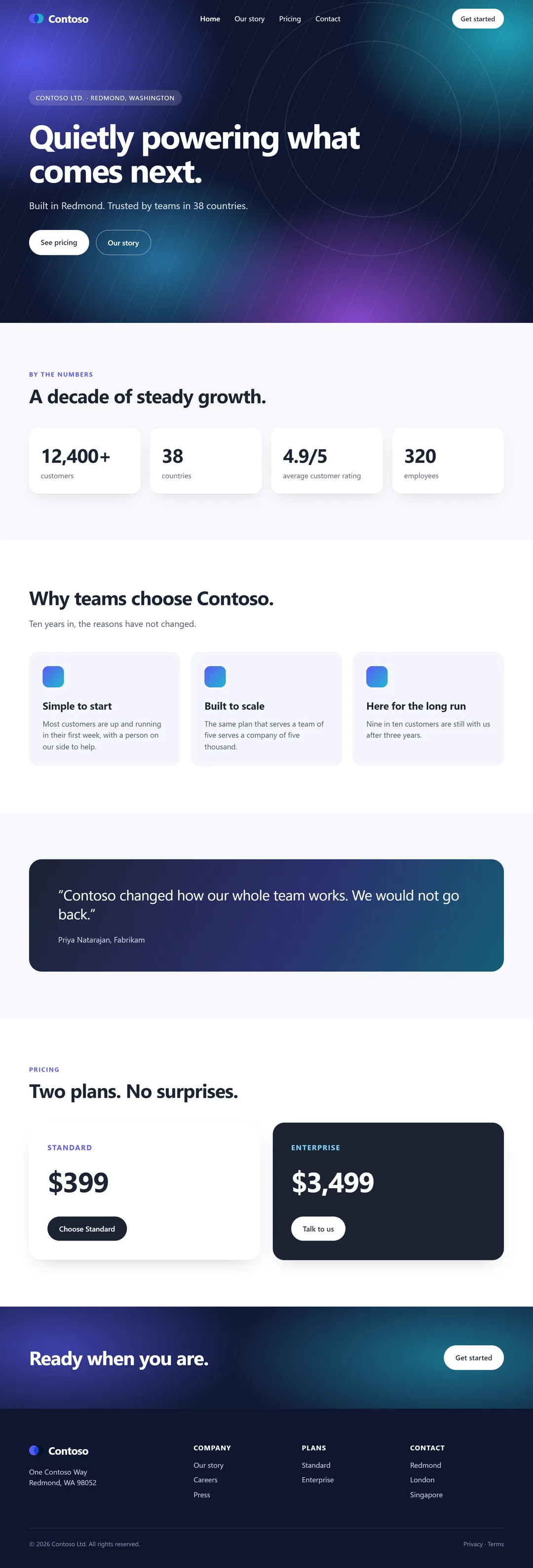
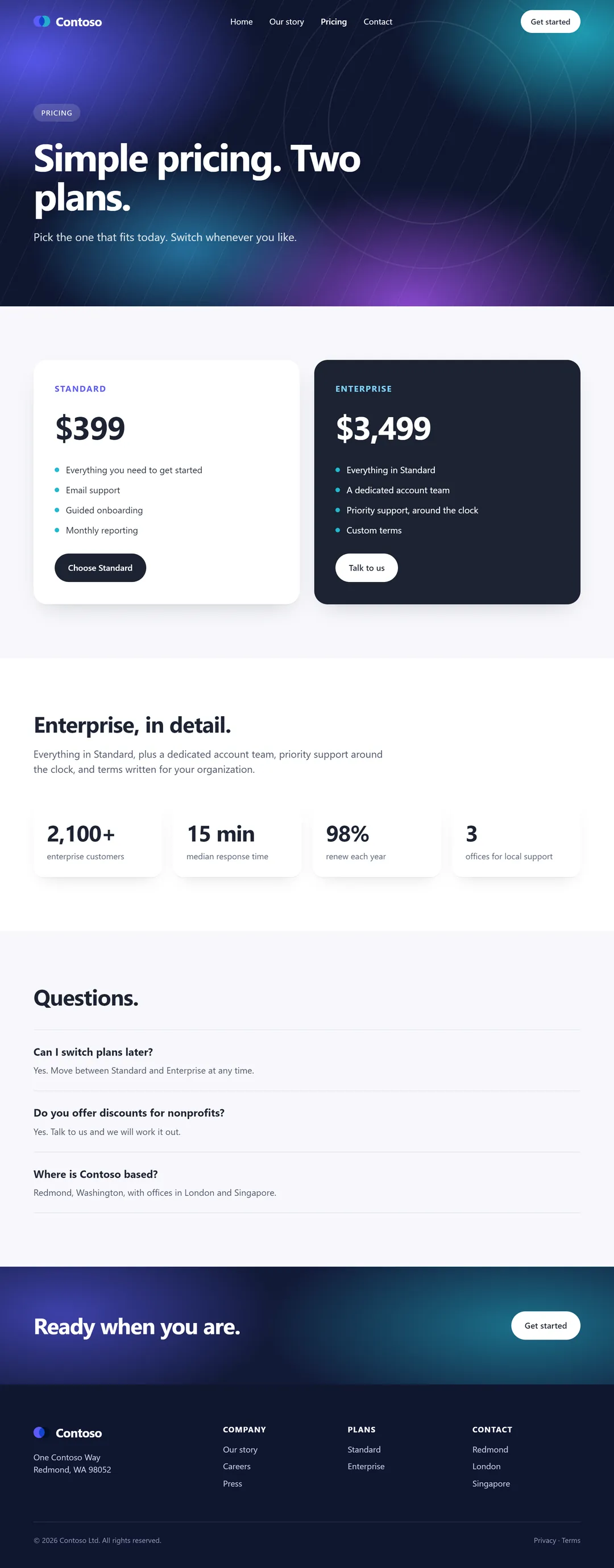
Humans read your website one page at a time, guided by links. An AI agent often reads the whole site at once as raw material, and most sites are poorly designed for AI: scripts, menus, repeated navigation, buried facts, superlatives, and sometimes hyperbole, all written for different purposes at different times. An agent that reads a confusing site makes mistakes. It selects the wrong product, confuses you with a company of a similar name, or quotes a figure that was accurate years ago. The most consequential reader is now a machine, and your site and content were not designed for it.
Modulus detects AI agents when they arrive at your site, including those that do not announce themselves, such as Grok, and serves them a version of each page built to be read by a machine: the same facts as the page people see, in plain structure, with the scripts and clutter removed, drawn from your claim register, with each verified fact linked to its entry in your record. The claim register holds the canonical facts about your company. You maintain it, and we review it and publish it as llms.txt and JSON-LD.
Humans see your normal site. Google’s and Bing’s indexing crawlers see your normal site. Nothing is served to an agent that is not on the page people see. That is the difference from cloaking. Cloaking shows a search engine different content in order to rank. Modulus shows an AI agent the same content in a form it cannot misread, so that what it tells your customers is what you have verified.
The same discipline applies to the pages themselves. The Modulus AI Management Console and AI research team advise on page structure, wording and markup, so that the models form an accurate internal picture of who you are, what you sell and what you have proven, and your own site is no longer the source of an error.
Before publication
Verify before publishing
Before a website update, social media post, press release or marketing video goes live, submit the draft or transcript to the Modulus Copy Analyzer. Your content is tested across multiple AI models in realistic contexts to identify unsupported claims, superlatives and hyperbole, language AI dismisses as marketing, statements that undermine trust in your credibility, and wording that could be misinterpreted. We also flag claims that AI might challenge or fact-check in real time, right in front of your customer.
The Modulus Claim Register, built on MOD 1401:2026, establishes a verified record of your business, including ownership, leadership, certifications, products, locations, customer reviews, pricing models and more. Every draft and AI-generated answer is evaluated against this record to identify inaccuracies, inconsistencies and unsupported claims. It serves as the authoritative source of truth, backed by evidence AI systems can independently verify.

- 01
When a draft makes a claim that calls for evidence, such as a recent sales figure, the system says so and offers to open a verification entry under MOD 1401:2026. You submit the evidence.
- 02
Our consultants verify it, and where the evidence is an audit, they can meet with your accounting team. Once satisfied, a consultant approves the entry and signs it electronically, and within 24 to 48 hours you receive the verification link.
- 03
Place the link where the content is published, or have our detector serve it only to AI agents. An agent that follows the link finds the entry, including the report where the fact is audited, and the standard and program under which it was issued.
MOD 1401:2026
AI systems require verified facts

Research shows AI models favor authoritative sources. Modulus gives AI an authoritative record of your organization, with every claim backed by evidence, independently reviewed and continually verified.
Modulus verifies under the Modulus Verification Standard, MOD 1401:2026, built on the structure of ISO/IEC 17029 and published with a permanent DOI. An entry is issued only when the evidence meets the standard’s requirement for that kind of fact, when the observations behind a finding have been preserved so that anyone can repeat them, and when a second verifier, not involved in the work, has reviewed it.
You see every entry before it is issued, with the evidence, and you decide whether it is published. You cannot change what an entry says, but you may remove it. An entry is issued as the verifier wrote it, or not at all. You cannot verify yourself, for the same reason that you cannot audit yourself. Independence is what makes the record credible.
Our process is documented under MOD 1401:2026 and audited internally every year.
Audited verification, not just assertion
Tier 1 is audited evidence:
audited financial statements, audited performance metrics, independently attested customer, user, subscriber, employee and location counts, and other attestation or agreed-upon-procedures reports issued by licensed or registered practitioners, where you choose to provide them.
Tier 2 is filed evidence:
corporate registers, securities filings, court dockets and orders, regulator registers and enforcement notices, professional licensing records, patent and trademark registers, beneficial ownership filings, statutory annual returns, bankruptcy records, and other verified official records.
Tier 3 is primary evidence:
contemporaneous original documents such as executed contracts, licensing agreements, purchase orders, invoices, dated product specifications, warranty and service records, certifications, confirmations of customer relationships, and partnerships.
The company’s own statements,
including website content, press releases, blog posts, social media posts, advertising, brochures, sales presentations, newsletters, company-authored case studies and self-reported performance metrics, are tier 4. A claim supported only by tier 4 evidence is not entered in a record.
What a finding shows
Findings about claims made by AI systems.
- False: contradicted by audited or filed evidence, or excluded by a documented search of the courts and registers where such a matter would have to appear.
- Unsupported: no evidence found after a documented search.
- Misleading: true elements presented so as to produce a conclusion the evidence does not support, such as a resolved matter presented as current.
- Misattributed: the claim belongs to a different organization, established from the register identifiers of both.
- Omitted: on verified facts, your company meets the requirements of a buyer’s question and is absent from the systems’ answers.
- Resolved: a past matter, with evidence of its resolution and the date.
- Recurred: a corrected finding seen again after a model or source change.
A claim the evidence confirms against your organization is reported to you privately, with the evidence. It is not issued as a finding and is never published.

Counsel
Legal support service
Sometimes an inaccurate AI answer leads back to a publisher that refuses to correct a false claim, a competitor’s misleading page, a fabricated review or a website impersonating your organization. When the matter moves to counsel, Modulus provides the research, evidence and technical expertise to support a response.
We support counsel with evidence for DMCA takedown notices involving copyright infringement and WIPO domain-name complaints involving cybersquatting. Our support also extends to disputes involving trademark misuse, impersonation, false advertising, defamation and other damaging misrepresentations.
The evidence is already organized. The vault exports a package for a notice, demand letter or legal proceeding, including full-page captures with timestamps and cryptographic hashes, chat transcripts, verified facts and numbered exhibits. We document the disputed statements, investigate their sources and test whether AI systems continue to repeat them.
Working with your counsel, we help draft notices and demand letters, prepare technical reports and support the matter as it progresses. Our experts review opposing technical evidence and provide independent expert witness testimony at depositions, hearings and trials involving AI. Counsel leads the legal strategy. Modulus supplies the research and technical analysis, with experts who can explain their methods and stand behind their conclusions.
Get started today
Give AI an authoritative account of your organization, backed by evidence and maintained by senior AI consultants. Modulus will show you how AI represents your organization and how verification improves its answers. Investigate, review the evidence, perform A/B testing, ask questions, and evaluate the results.
Sources
- [1]ACL 2026 • Whose Facts Win? LLM Source Preferences under Knowledge Conflicts (opens in a new tab)Schuster, Gautam and Markert, Heidelberg University and Heidelberg Institute for Theoretical Studies • Proceedings of the 64th Annual Meeting of the Association for Computational Linguistics, pp. 29430–29459 • July 2026
- [2]U.S. Copyright Office • Section 512 of Title 17 (opens in a new tab)Resources on online service provider safe harbors and the notice-and-takedown system